Hungarian rail freight operators faced higher unit costs and lower revenue per gross tonne-kilometre in Q1 2026, according to the latest Rail Freight Cost Index from Hungrail. Unit costs rose by 4.1% year-on-year, while specific freight revenues fell by 2.6%.
Rail freight performance has been declining since 2023, with the weight of goods transported down 22% and tonne-kilometre performance down 18% over three years.
In 2025, rail freight performance measured in freight tonne-kilometres fell by 11%. In Q1 2026, performance declined by a further 4.5% year-on-year, while the weight of goods transported decreased by 1.6%. Domestic rail freight performance fell by 13.2% in the first quarter, and international transport decreased by 3.5%.
Hungrail linked the weaker demand to lower output in transport-intensive sectors and foreign trade trends. In 2025, Hungarian industrial output fell by 2.5% and agricultural output by 4.3%, while construction grew by 3.0%; the combined performance of goods-producing sectors declined by 1.6%.
The association said this reduced the market for rail-suitable cargoes such as steel products, chemical raw materials, grain, fertilisers, construction materials and energy. Export volumes fell by 0.6% in 2025, while imports increased by 2.8%, but the import growth was less concentrated in bulk goods typically moved by rail.
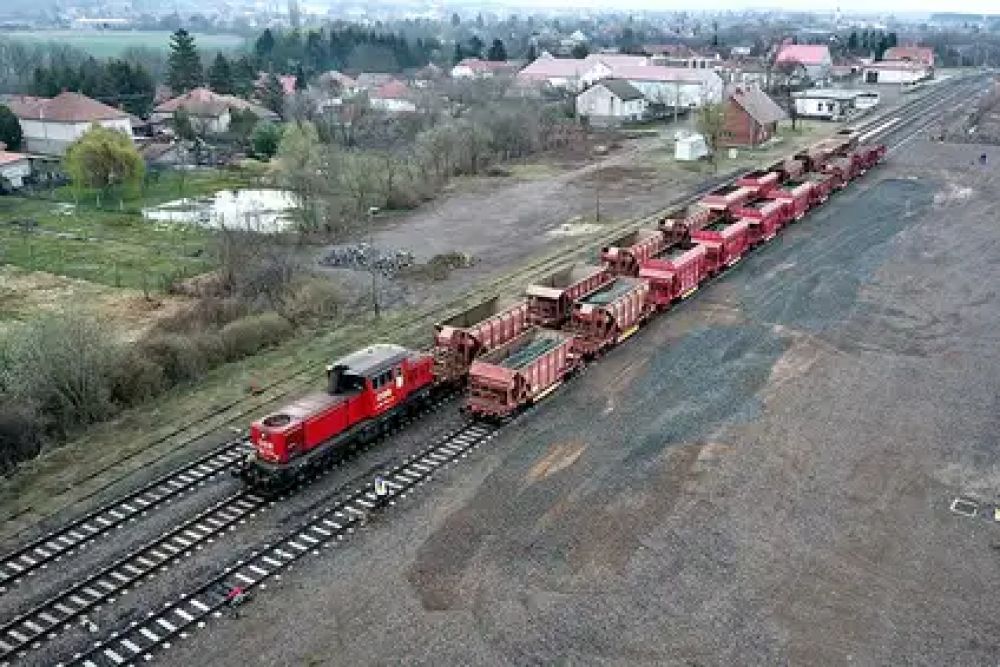
Cost growth was driven mainly by traction operating costs, operating expenses and corporate governance costs. Specific traction operating costs in rail freight were 10.9% higher in Q1 2026 than in Q1 2025, although they were broadly unchanged compared with Q4 2025.
Lower traction energy prices partly limited the increase. MÁV’s average final invoiced traction electricity price was HUF 59.2/kWh in Q1 2026, 10.1% lower than a year earlier and 1.6% below Q4 2025. Wholesale diesel prices were around 11% lower year-on-year and about 2% lower than in the previous quarter.
Hungrail said rail freight companies still faced a gap between costs and revenues. Without lower traction energy fees, the increase in unit costs would have been around 5.5% instead of 4.1%. To offset the cost increase and revenue decline, the sector would have needed a 6.7% increase in freight rates over the past year.
The pricing environment remained constrained by competition with road transport and weak demand. Hungrail said rail freight rates in forints fell by 2.6% year-on-year in Q1 2026, mainly because of exchange-rate effects; excluding exchange rates, the specific rate level would have increased by about 1.5%.
The forint exchange rate added further pressure. Hungrail said around 85% of Hungarian rail freight traffic is international, with revenue mainly generated in euros, while a large part of operating costs, including track access charges, traction energy, wages and services, is incurred in forints.
Infrastructure constraints also affected rail freight economics. Hungrail cited track renewals, temporary speed restrictions, capacity limits and closures as factors increasing journey times, reducing punctuality and lowering vehicle utilisation, which raises costs per tonne-kilometre.
The Rail Freight Cost Index is published quarterly by Hungrail and is based on a representative questionnaire survey among rail freight carriers. The index tracks specific cost changes and compares them with fee income to show the rate increase that would be required for operators to cover cost growth.