CSX Corporation

CSX saw stable freight volumes in 2024, with total shipments growing by 1% compared to 2023. The company highlighted growth in merchandise and intermodal sectors, balancing out challenges in coal freight, which experienced declining revenue.
For the year, CSX generated €13.32 billion ($14.54 billion) in revenue, a slight decrease of 1% year-over-year. Adjusted operating income stood at €4.91 billion ($5.35 billion). Fourth-quarter results showed revenue of €3.26 billion ($3.54 billion), reflecting a 4% decline compared to the same quarter in 2023.
Norfolk Southern

Norfolk Southern reported heightened activity in industrial development projects, driven by strong demand across key sectors such as steel, plastics, renewable fuels, and food processing. In 2024, the company supported 149 new or expanded industrial projects, with 65 starting operations during the year.
These initiatives are expected to generate long-term growth in freight volumes, particularly in sectors requiring rail connectivity for heavy or bulk commodities. Norfolk Southern’s infrastructure developments include new rail-served sites and acquisitions of land to strengthen network capacity.
Union Pacific
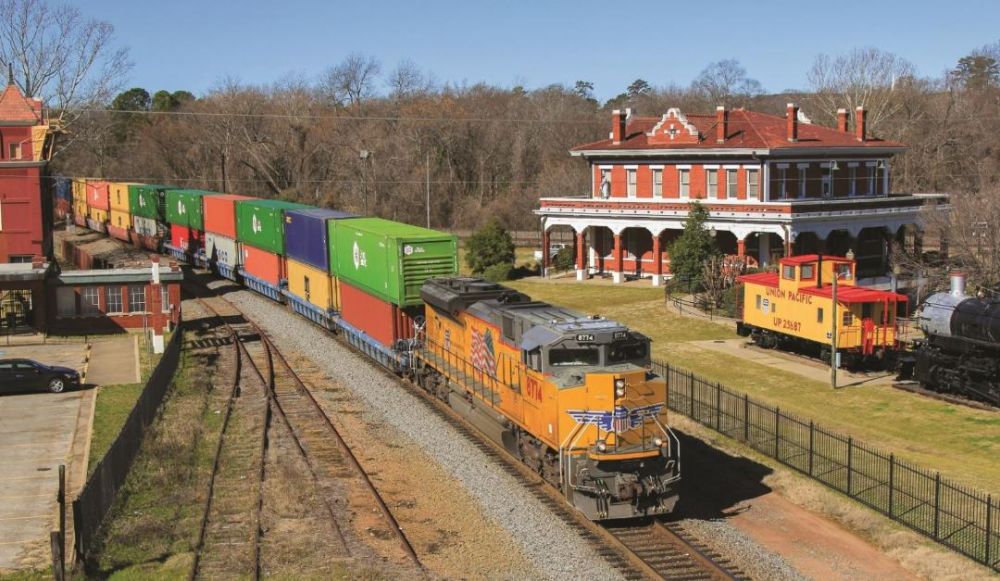
Union Pacific focused on operational performance, achieving growth in freight volumes, particularly in intermodal and bulk commodities. Revenue carloads increased by 3% in 2024, supported by favorable pricing and efficiency improvements.
The railroad recorded total annual revenue of €22.28 billion ($24.3 billion), with an operating ratio of 59.9%, representing a notable improvement over the previous year. Workforce and locomotive productivity metrics also showed year-over-year progress, reflecting investments in operational efficiency and technology.
While 2024 presented challenges, such as fluctuating commodity markets and changing customer demands, all three railroads demonstrated resilience through focused growth strategies in key freight sectors, including intermodal, bulk commodities, and industrial goods. Investments in infrastructure and service capabilities remain priorities for their long-term performance in a competitive logistics landscape.