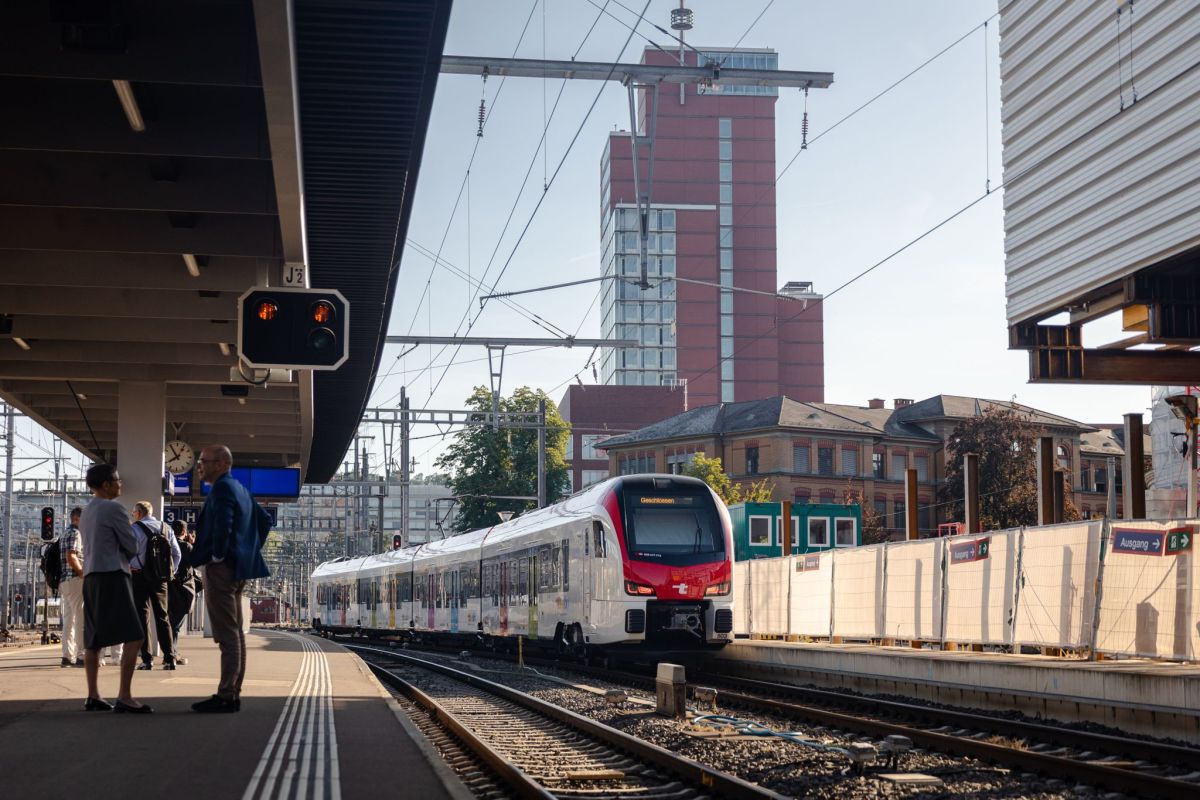
The aim of the project is to thoroughly evaluate the performance of the new obstacle detection system in daily operation under different weather and track conditions. The test data will be used to further refine the system and optimise the positioning of the detection sensors. The system will record background data for the duration of the project, and neither train drivers nor passengers will be aware of its operation.
Albrecht Neumann, CEO of Rolling Stock at Siemens Mobility says: "Intelligent trains that relieve their drivers of routine tasks and support them in their work are the future of digitalised rail transport. These trains will be able to start and stop automatically, ensure energy-optimised operation, react quickly and safely to obstacles on the track and shunt fully automatically in the depot area."
Technically, the sensors used in the project include powerful LiDARs for near and far object detection and an infrared camera. As part of the Berlin Digital Rail Operations (BerDiBa) research project at Siemens in Berlin-Adlershof, the algorithms for evaluating the sensor data were developed specifically for the rail sector and have already been optimised several times. The system continuously compares the position of a train with the location of detected objects on a digital map. Based on these ongoing calculations, the system decides whether to warn the driver or brake the train. For the first time, a newly developed map from DB InfraGo is being used for this purpose, which represents reality in 3D with centimetre precision.
The technology is being tested in a partnership between Siemens Mobility (installation management, sensors, hardware, software and digital map), S-Bahn Berlin (trains, installation, operation) and Digitale Schiene Deutschland/DB InfraGo (digital mapping, open data platform). The test results will be evaluated together with Verkehrsverbund Berlin Brandenburg (VBB).